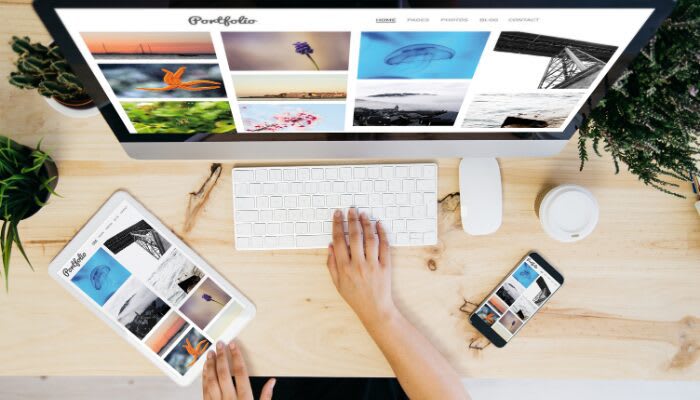
Create a portfolio that shows your growth and shapes your goals. A place for reflection, pride and future development. Discover your potential!
 Rogier Rijnja
A portfolio that shows who you are
📚 Maybe you recognize that moment when you flip back through old notes, projects or sketches. You see what you've made, but also how you've changed. Space emerges to reflect on what you've learned and what you still want to discover.
🗂️ A portfolio helps with that. It brings work together, but especially the thoughts and steps that preceded it. It becomes a place where pride and direction come together; a calm overview of where you stand and where you want to grow.
👩💻 Whether you're learning something new, applying for jobs, collaborating or starting a business: a portfolio helps make visible what you have to offer. Not just the results, but also the journey to get there.
Why a portfolio is valuable
📝 A portfolio tells a story that's more personal than numbers or experience. It shows what you can do, but also how you got there. For many people, it's the place where their growth becomes visible.
🔎 A portfolio isn't just handy as a presentation, but also a great platform for reflection. By looking back at what you've made or learned, you see patterns. You discover what you enjoy, what gives you energy and where you want to become stronger. This way the portfolio becomes not just a means to show something, but also to better understand what you're looking for.
What you can think about
💡 What you include in your portfolio depends on your direction and interests. Yet there are elements that are almost always valuable.
📂 Projects or assignments that say something about what you can do or how you work. These could be study assignments, collaborations, personal projects or initiatives.
A brief description per project in which you explain what you did, why you find it important and what you learned from it.
Feedback or results, for example an assessment, reaction or achievement that shows how your work was received.
A personal piece in which you tell what drives you, how you work or what your ambitions are.
🎨 Especially if you're working on creative or entrepreneurial projects, it helps to also show the process. Concepts, sketches or early versions show how an idea grows and often get more value than just the end result.
How you start
🚀 Building a portfolio starts small. First collect what you have, even if it's not perfect yet. Anything that says something about your way of working or thinking is a good starting point.
🎯 Then you choose the parts that together best show who you are. Think about assignments where you did something unique or projects where you learned a lot.
🗂️ Then create structure:
– A brief introduction about yourself or what you do.
– An overview of your work with images and explanations.
– A closing reflection or summary where you describe what you want to achieve.
📐 Make sure the content takes center stage. A simple design often works better than a busy presentation.
Online or physical
💻 A portfolio doesn't have to be on paper. Many people nowadays choose a digital version, for example in Notion or Behance, or through a personal website. This makes it easy to share and update your work.
📕 However, a physical portfolio remains valuable during conversations or presentations. It makes an impression when someone can literally hold or flip through your work. A tangible folder or print shows that you've put time into how you present yourself.
🔗 The combination of both often works best: an online portfolio for accessibility and a physical version when you want to convey something personal.
Check Findmino's online tool for creating your portfolio
Tips for a strong portfolio
🔝 A good portfolio is clear, personal and current. A few guidelines can help:
⭐ Be selective. Only show work that adds something to the image you want to present.
Use short, clear texts. Explain what you've done and why it's important.
Ensure clarity in the structure. Images, text and sequence should reinforce each other.
Update it regularly. Add new projects and remove what's outdated.
Show what makes you stand out. This could be the style of your work, but also the way you think.
🌱 A portfolio is never finished. It grows along with your experience and goals.
What a portfolio really shows
🖼️ A portfolio is more than a collection of results. It shows what you stand for, what you've learned and how you make choices. Whether it's used for a job application, to find collaborations or simply to reflect on your own development: it provides overview and direction.
🔮 It helps you look back with confidence at what you've accomplished, but especially look forward to what's still to come. And that makes it not just a document to show, but a tool that supports you in every new step.
About the author Rogier Rijnja
Rogier is co-founder van Findmino. Hij heeft veel internationale ervaring in senior management rollen in bedrijven als Nike, Apple, Amazon, Danone en een paar Nederlandse merken. Naast business is hij geïnteresseerd in wat Nederland nou zo mooi maakt.
Useful websites
Your website here
Visit website
Disclaimer
The information on this page is meant as general inspiration. We share links to third-party websites that may interest you, but we cannot guarantee that the content is always up-to-date, accurate or safe.
Comments (3)
Log in to comment
Thanks voor het delen
Tof 👏




Herkenbaar