Automotive, Luchtvaart, Zeevaart
Salary
€60.000 - €120.000/yr
Level
Mid-level
Outlook
Stable
Sector
Automotive, Luchtvaart, Zeevaart
What does a Pilot?
(Piloot) A pilot in the hospitality, tourism and events industry forms the driving force behind unforgettable experiences, for both passengers and cargo. The responsibilities are extremely diverse and range from preparing the flight and performing pre-flight checks to safely operating aircraft to various destinations around the world. Each day begins with a thorough briefing, where flight plans, weather conditions and any special instructions are discussed with the team. A pilot works both independently and in a team of experienced co-pilots, air traffic controllers and cabin crew. The environment is dynamic and challenging; pilots can visit airports in exotic locations, during a lively landing in a busy city or a peaceful takeoff above scenic landscapes. This role is interesting because a pilot is not only responsible for the safety and well-being of passengers, but also for transporting valuable cargo that is essential for events and tourism. The impact of the work is enormous; pilots connect people and goods worldwide and thereby make a significant difference in their experiences and lives. However, the role of pilot comes with challenges. Changes in weather conditions, technical problems and tight schedules can increase pressure. Additionally, pilots must constantly update their skills and knowledge, given the rapid technological developments and regulations in the aviation sector. When these challenges are approached with dedication and expertise, pilots contribute to an industry where service and safety go hand in hand.
Videos about Pilot
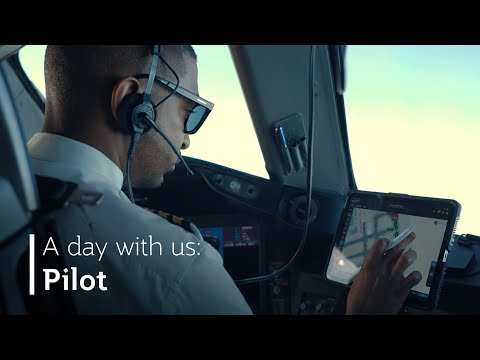
Day in the life of a pilot
Required Education
For a career as a pilot, you need at least a HAVO diploma with the Nature & Technology (N&T) profile, where mathematics and physics are important subjects. Next, you must complete a recognized pilot training program at an aviation school or through the Royal Netherlands Air Force, where you obtain your commercial pilot license (CPL) and pilot's license. After your initial training, extensive flight hours and experience are essential to advance to senior positions. A technical background at HBO or WO level can be an advantage, but the specialized pilot training and flight experience are decisive for your career.
Required Skills
Career Perspective
As a pilot, you often start as a flight instructor or co-pilot at smaller airlines to build experience. With more flight hours, you can advance to captain on larger aircraft, specialize in cargo or passenger flights, or move to corporate aviation. Experienced pilots can advance to management positions such as chief pilot, flight operations manager or even executive roles within airlines. The aviation industry continues to grow, especially in cargo and regional connections, which offers good career opportunities despite the high training investment.
AI Impact on the job
AI transforms the role of pilots by automating tasks such as navigation and flight monitoring. This shifts focus and responsibilities toward technology management and problem-solving. Important new skills include technological knowledge, data analysis and crisis management. The job market may shrink due to automation, but opportunities remain in supervision, maintenance and AI integration. Pilots must adapt to the changing environment, where lifelong learning becomes crucial for their future.
Career Ladder
Steps Up
→ Pilot (Current role)
Typical Previous Roles
Related Studies
Game Development
4 jaar • ICT
WO (University)Vertaalwetenschappen
3 jaar • Communicatie & Media
HBO (Applied Sciences)International Teacher Education for Primary Schools
4 jaar • Onderwijs & Training
WO (University)Spaans
4 jaar • Talen & Literatuur
HBO (Applied Sciences)Energy Engineering
4 jaar • Tech & Engineering
WO (University)Internationale Bedrijfskunde
3 jaar • Bedrijfskunde & Economie
Search Current Vacancies
Tip: These links take you to current vacancies for Pilot in the Netherlands
Discover more on Findmino
Other studies, careers, ideas and blogs you might not know yet.
This website uses cookies
We use cookies to improve your experience, personalize content, and analyze traffic. By clicking "Accept all", you agree to our use of cookies. You can also adjust your preferences or find more information in our cookie policy.